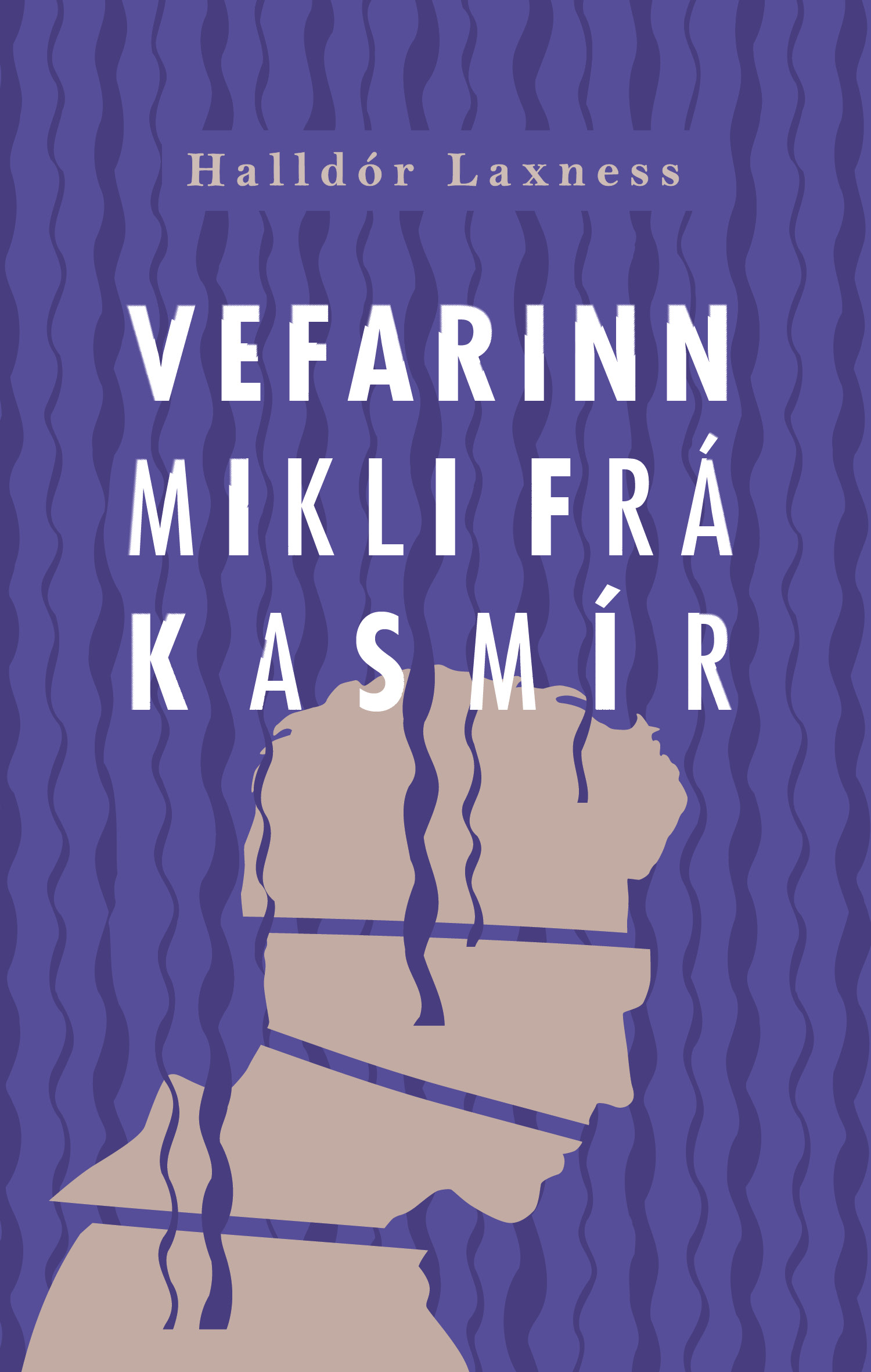
The Great Weaver From Kashmir (1927)
400 pages
Fiction
The Great Weaver From Kashmir (1927)
REVIEWS “Finally, finally, an imposing work of fiction, which rises like a cliff from the flatness of Icelandic poetry and fiction of recent years!” KRISTJAN ALBERTSSON, VAKA, 1927
Reviews
Icelandic writers assure me that whatever foreigners might think of this fascinating but shaggy beast of a book, they understand that it made modern literature possible in Iceland. You could now write past the Sagas, whatever their noble history. … this book is, before anything else, a romance: boy and girl inseparable since childhood, girl first neglected, then rejected, not for a lover but for the Catholic Church and for vaulting intellectual ambition… Laxness makes a duke’s mixture of styles and techniques to pursue his narrative. The book begins with straightforward third-person narrative, proceeds with an exchange of letters, then a picaresque travel narrative with shifting voices and points of view, then dream sequences and more. ... The Great Weaver generates great excitement (a kind of breathless speed) that reminds me of the mad energy of On the Road … a sort of Icelandic The Great Gatsby in reverse: Jimmie Gatz, North Dakota farm boy, goes to the city to get rich and pursue his romantic vision of Daisy -- Steinn, however, falls in love with the Virgin Mary and poverty to escape his middle-class roots. Same story in reverse?
BILL HOLM, THE LOS ANGELES TIMES BOOK REVIEW
The Great Weaver from Kashmir is as much a domestic parlour drama as it is a novel of ideas; it can be seen as the downward spiral of an antihero or an exploration of idealism and loss; it is at once an inward-looking and daring early novel and a modern epic spun by a superior craftsman.
JOLABOKAFLOD.ORG
The Great Weaver from Kashmir should not be mistaken for a “posterity” translation. A novel which captures the conflicting passions and pitfalls of youth into one tragicomic character, Kashmir can be read as a revisionist approach to Siddhartha—a rendering of one man’s search for spiritual enlightenment becoming confused and complicated by the zealotry and naivete of youth. Its protagonist, Steinn Elliði, is a self-aggrandizing, willfully divisive, and talented young poet who leaves Iceland on an impassioned, though obscure, quest.
LARISSA KYZER, THREE PERCENT, US
Shortly after World War I, Steinn, a young Icelandic poet-philosopher, heads abroad to make himself “the most perfect man on earth” and perceive “glory on the visage of things.” Leaving behind his homeland and would-be sweetheart, Diljá, for Europe, Steinn proves a master of any doctrine he cares to take up, but fails to satisfy his longing for perfection. His “aesthetic soul” leads Steinn to embrace communism while abandoning his own mother, and later to join the order of the Benedictine monks at the expense of worldly intimacy. Much of Steinn’s agony stems from the fact that his quest for perfection is solipsistic; even in his most pious phase, he shows utter disregard for people, including Diljá and his own family. Though he’s destined to fall from the get-go, it’s intriguing to see how Laxness’s antihero dives into manifold ideologies, achieving essentially the same result each time.
PUBLISHERS WEEKLY
… immensely readable novel …
AYAZ RASOOL NAZKI, KASHMIRPAGES.COM
Laxness is a beacon in twentieth-century literature, a writer of splendid originality, wit, and feeling.
ALICE MUNRO
The Great Weaver From Kashmir marked a watershed in Icelandic fiction and migt be interpreted as his Divine Comedy: pointedly divided into one hundred chapters and bearing an epigraph from Dante‘s „Paradiso,“ it records its young protagonist‘s own heaven, hell, and purgatory. A Laxness described it: „My way to earthly interests took me through the futility of the Heavens...
HALLBERG HALLMUNDSSON, THE GEORGIA REVIEW, VOL 49
The Great Weaver from Kashmir is a modernist road Bildungsroman, in which a young egotistical philosopher–poet dandy moves from selfish hedonism to bleak monasticism. ... Its style is intermittently expressionistic and modernist; the locations are disjointed, with action in Iceland, England, France, Belgium and Italy; and the narrative threads back and forth between late 1921 and early 1927. The principal theme is the struggle between the need for spiritual enlightenment and the temptation of worldly pleasures, the latter usually mediated through the sexual attractiveness of young women.
DAVID S BALDWIN, BJPsych Advances, CAMBRIDGE UNIVERSITY PRESS
Rights Sold
Translation rights sold
Germany/Austria/SwitzerlandSteidl
Previously published in several languages
USArchipelago