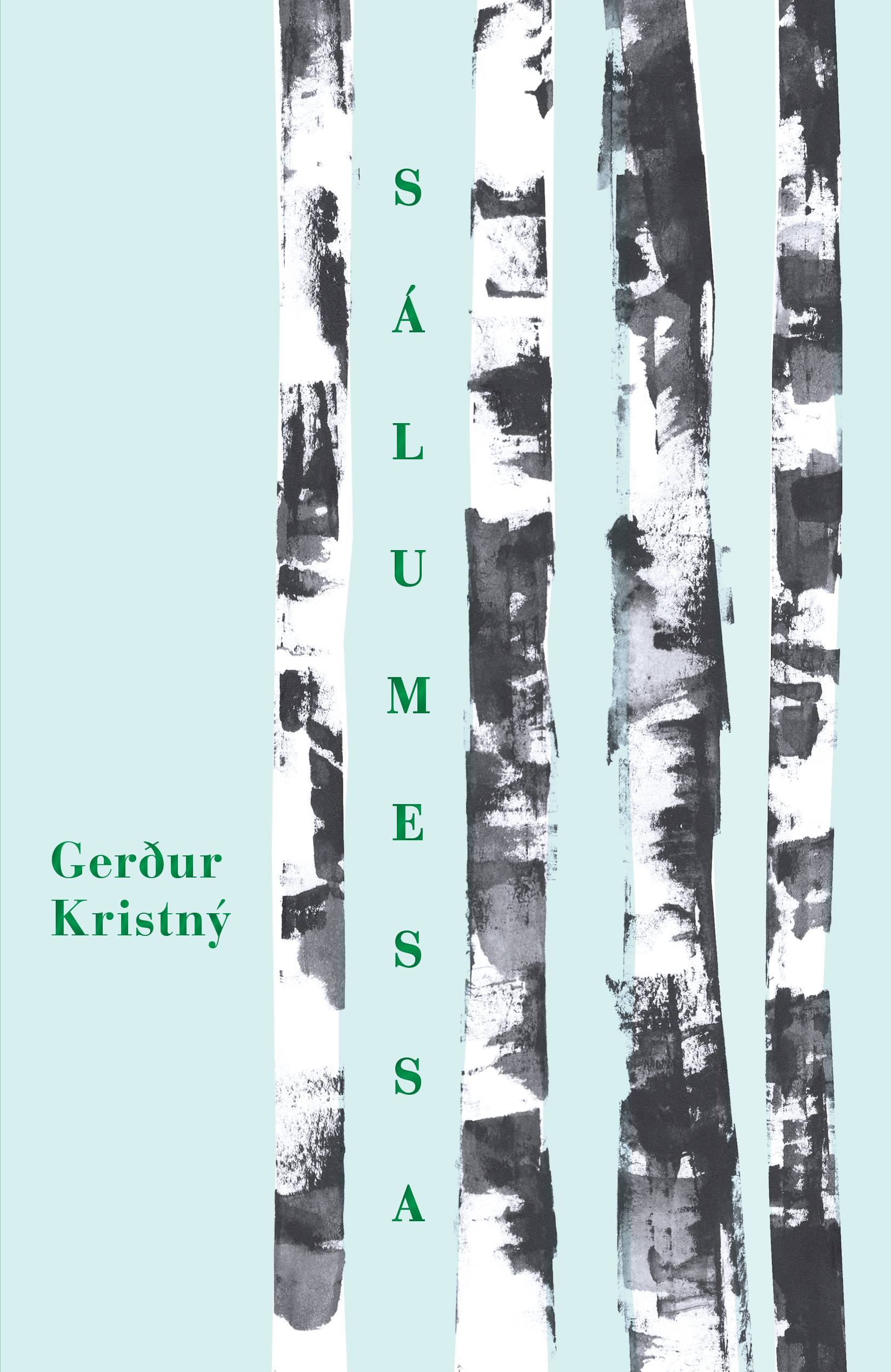
Reykjavik Requiem (2018)
This is the third of the trilogy which already comprises the highly-acclaimed Bloodhoof and Drápa. In all three poetic sequences, the poet employs the archaic form of the saga to conjure up razor-sharp dark and bewildering images of the fates of women in a world where the boundaries between life and death and what lies beyond are unclear. In this particular sequence, Gerdur Kristny gives a voice to a woman whose story was one that society was not ready to hear at the time, a woman who was abused as a child but who committed suicide before her own account of what had taken place was published. At its heart is the very notion of articulation, of how our language and culture determine what stories we can tell and what words we can use.
- Nominated for the Icelandic Literary Prize 2018
- The Icelandic Booksellers’ Prize for poetry 2018
- Nominated for the Maistjarnan Poetry Award 2019
Reykjavik Requiem (2018)
This is the third of the trilogy which already comprises the highly-acclaimed
SIX STARS OUT OF SIX POSSIBLE CHRISTIAN STOKBRO KARLSEN, NORDJYSKE, DENMARK
Reviews
KATRIN ODDSDOTTIR
JORUNN SIGURDARDOTTIR, ORD UM BAEKUR, NATIONAL BROADCASTING SERVICE
TRYGGVI GISLASON
VIGDIS GRIMSDOTTIR
JULIE HOGG, LONDON GRIP POETRY REVIEW
Awards
Won
- Icelandic Booksellers' Prize for poetry 2018
Nominated
- Icelandic Literary Prize 2018
- Maistjarnan Poetry Award 2019