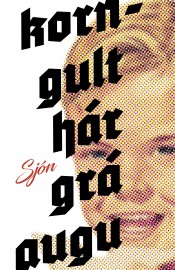
Gunnar Kampen is a young man living in Reykjavik in the late 50s. He’s got a degree from a business college and is well set in life. He interests himself in the affairs of his fellow men as well as the outside world near and far. Living with a loving mother and two sisters who have doted on him since childhood, he by turn is a caring brother and son. In spring 1958 he founds an anti-semitic nationalist party in the West End of town, and with much enthusiasm starts supporting the ever growing international network of Neo-Nazism. In a prose that moves with ease from lyrical boyhood memories to the darkest of thoughts, Sjón explores the life of his main character in his unique way. At the same time the book asks the question if Gunnar Kampen is such a special case after all. The novel
“One of this story’s assets, and that of historical novels in general, is that it enables authors and readers to re-visit historical events, not exactly as they occured, but rather as we feel they were, so we readers are able to see through the eyes of those who preceded us, we see the events and we understand them from different points of view, and hopefully manage to forge a sensible connection to the past, based on feeling and reason.. ... This story is a cleverly composed mosaique, we are not shown all the fragments, and they are not at all presented in a chronological order, yet gradually, the image becomes clear, and the main character comes alive and understandable to us ... Sjón’s way of telling a tale is shifting throughout this book: it starts as a third-person account, almost neutral to begin with, like an article in a newspaper, followed by chapters told from the main character’s point of view. In the second part of three, the author makes a radical shift in the story, using different ways of telling the story, through private letters, news items, even a telegram, and then he goes back to the third-person mode. ... The most important point made in this historical novel by Sjón is the revelation of an Icelandic point of view adapted to this ideology; it is a good thing to remind ourselves that the “innocence” of the island nation is an illusion and there are always those who seek out totalitarian forces, and this discourse must be handled firmly, also with the tools of poetry, like Sjón does with this book, and that might be the method that will prove the most efficient and lasting.” Gauti Kristmannsson, Vidsja, National Broadcasting Service
A.S. BYATT, GUARDIAN
EL PAÍS
TIMES LITERARY SUPPLEMENT
THE NEW YORK TIMES BOOK REVIEW
ASYMPTOTE JOURNAL
ROSIE GOLDSMITH, EUROPEAN LITERATURE NETWORK
NEEL MUKHERJEE
NEW STATESMAN
Kolbrun Bergthorsdottir, Kiljan, National TV
Ragnhildur Thrastardottir, Morgunbladid daily
Brynhildur Bjornsdottir, Frettabladid daily