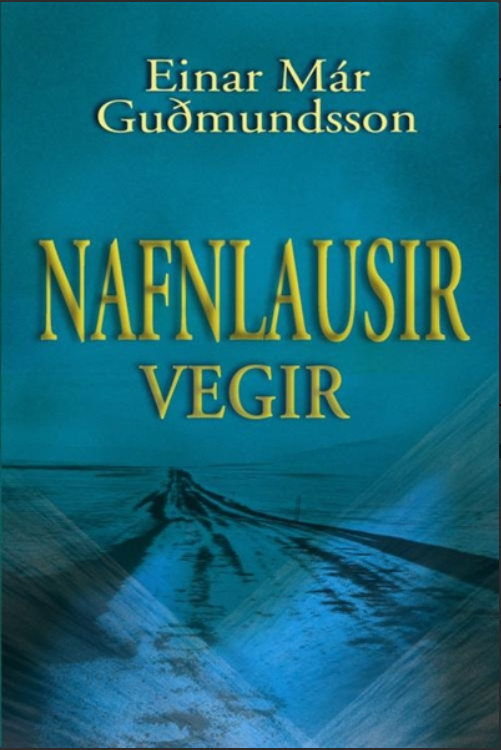
To give silence a voice and remember the forgotten. As everyone knows by now, Einar Már Gudmundsson’s fiction draws on the well of his father’s family history, and he uses the tradition of these past generations as raw material for his fiction by intertwining historical fact with fantasy. As I’ve said before, Einar Már has struck on a rich mine in these books; and the past that he describes in these stories is, in many ways, the past of us all, and most readers will therefore have little difficulty in connecting with these stories and being enchanted by them. But their magic does not least lie in the artistic sensitivity with which he works from this material. His narrative style consists in giving a personal tilt to the Icelandic tradition of story-telling, in the best tradition of so-called “Nordic literature” – of which William Heinesen is perhaps the foremost exponent. Einar Már, himself, has acknowledged the influence of the Faroese master on his writing, and this collection of stories has something in common with Heinesen’s “Thórshafn Stories” in which the main focus is on character description and less emphasis is placed on the “plot”. It is precisely characterisation that constitutes the core of this book, as it did in the two previous volumes. The narrator, Rafn Ólafsson, mostly keeps a low profile and allows the pictures of the various family members to develop of their own accord, as they evolve in the text... But even though Ragnar, the idealist, and Ívar, the realist, are in the foreground of the pictures Einar Már draws in Nameless Roads, there are countless other characters who appear in the book, many of which are just as colourful as the two brothers. Nameless Roads adds more pieces to the jigsaw of Einar Már's family history, and I’m sure there is plenty more material to be tapped here, before the overall picture is completed. ... Once more this proves how fiction and reality can merge into one. Fiction may be a world onto itself, but at the same time it holds a mirror up to society. And at its best, fiction gives us insight into the lives of individuals and the societies they live in a way that historians, no matter how accomplished they may be, rarely can. Einar Már Gudmundsson’s book is a work of that precious ilk.