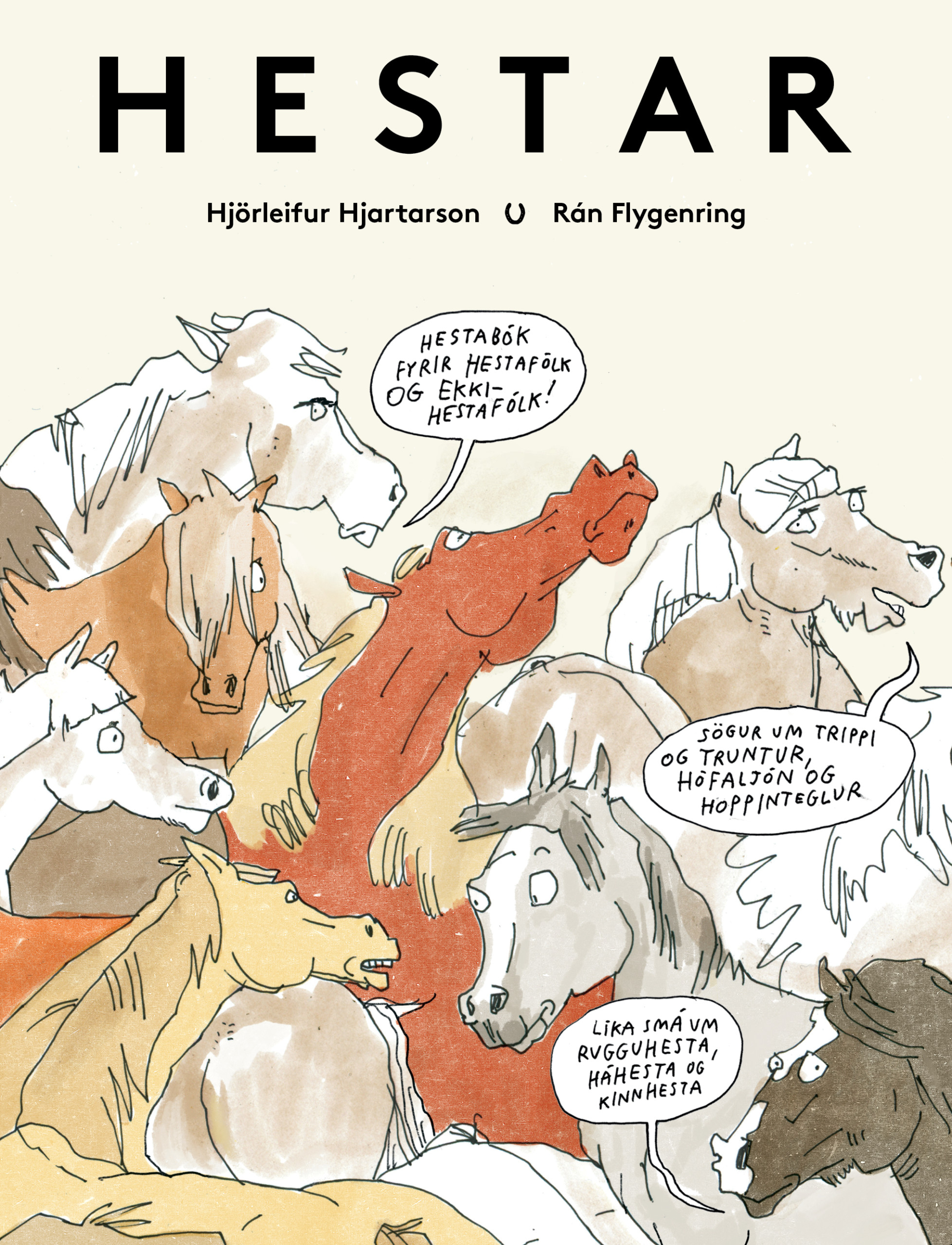
Birds by Hjörleifur Hjartarson and Rán Flygenring, released in 2017, remains fresh in many people's memories. Unlike other bird books, it examined the birds of the country from a unique perspective, achieving highly entertaining results. Horses aims for a similar approach, although, naturally, horses are quite different from birds in terms of use, capabilities, legends, and connections to humans. It includes a variety of interesting information about horses, our most essential servant, from the introduction of the ancestors of most horses 55 million years ago to Skugga-Sveinn from Hafnarfjördur, a horse that can count but gave up a career in mathematics for painting. The book discusses horses from the beginning of their coexistence with humans, as horses seem to have been a part of most human societies for millennia and thus hold a place in the soul of many nations. It tells of mythical horses, where many religions feature horses, both winged like Pegasus and our eight-legged Sleipnir, and all the other horses featured in the Poetic Edda, the horses in the Icelandic sagas, and those in folk tales like Faxi from Myrká, attempting to enter his mind as he watches Garún ringing the church bells. It narrates stories of horses with human intelligence, horses sent into battle, and more. Not all stories are comforting; one can even find a recipe for foal stew, making it clear that this book leaves nothing out. The beloved old horse Gráni by Megas, along with other horses in poems and songs, as well as topics on horse colors, gaits, riding gear, and equipment, idioms, and proverbs involving horses, are extensively covered. Hjörleifur Hjartarson's text is witty and readable, charming for readers of all ages. However, the story is only half told without Rán Flygenring's uniquely entertaining, descriptive, humorous illustrations that greatly enhance both the narratives and the information. On some pages, the text is merely secondary, allowing the images to shine and tell their stories. In line with the importance of the illustrations, great emphasis is placed on the book's appearance, with thick paper, an unconventional size, making it more of an art book than a text work. Above all, this is a book about horses for anyone with even a slight interest in these most faithful servants of Icelanders through the ages. CONCLUSION: Horses is a beautiful and entertaining book that all horse lovers, story enthusiasts, and illustration fans will enjoy, regardless of age.